Guides
The ADA and wheelchair-accessible vehicle rules for NEMT fleets
ADA NEMT vehicle rules cover lifts, ramps, securement, driver help, and service animals. Here is how US fleets stay compliant and documented.
What to take away
- A lift needs a 600-pound rated capacity and a 30-by-48-inch platform; a ramp needs 30 inches of width and a 1:12 slope for unassisted boarding.
- Four-point tie-down plus a vehicle-anchored lap and shoulder belt is the securement standard inspectors check first.
- Drivers may ask a service animal handler exactly two questions and may not charge a pet fee or demand certification.
- Aisle width and door header height fail more vans than lift capacity does. Measure your tallest contracted chair before you buy.
- Keep the lift inspection log, strap log, and training records per vehicle. A missing log can suspend a contract while the vehicles are fine.
What the ADA requires of an NEMT vehicle
The ADA sets the floor for how NEMT providers treat riders with disabilities. Private operators that contract with Medicaid, brokers, or hospitals inherit those duties through their contracts. State programs that run NEMT directly face the same rules as public entities. The obligations do not change with the rider's payment source.
Title II applies to state-run NEMT programs. A state Medicaid agency that brokers rides is a public entity for this purpose, and it must buy or lease accessible vehicles when it provides transportation to the public.
Title II also bars surcharges for accessibility features and requires equivalent service when a vehicle is not accessible. The text is at Americans with Disabilities Act Title II Regulations | ADA.gov.
Private NEMT companies fall under Title III. They must transport riders in an accessible manner, keep equipment in working order, and train staff to operate it. A broken lift is not grounds to deny a trip if a fix is possible. The duty covers assistance getting in and out of the vehicle.
Three duties appear in nearly every NEMT contract: provide an accessible vehicle, operate the equipment safely, and help the rider at no extra charge. Broker audits test all three. A missed securement can cost a contract even when the ride arrived on time.
Medicaid managed care organizations in California, Texas, Florida, and New York write these duties into provider manuals, and those manuals often exceed the federal floor. A fleet that meets only the ADA minimum can still fail a state readiness review. Confirm the current terms with your MCO and your state Medicaid agency.
Lift and ramp specifications that pass inspection
Federal lift and ramp standards come from the ADA Accessibility Guidelines and Department of Transportation vehicle rules. A lift must be rated for at least 600 pounds, with a platform at least 30 inches by 48 inches and a threshold ramp no steeper than 1:4. Controls must be reachable from a seated position.
Federal Minimums vs NEMT Practice
Federal minimum
- Lift capacity
- 600 lb
- Lift platform
- 30 in x 48 in
- Ramp width
- 30 in
- Ramp slope
- 1:12 unassisted
- Securement
- 4-point tie-down
- Aisle width
- 30 in
Typical NEMT practice
- Lift capacity
- 800 lb bariatric
- Lift platform
- 32 in x 54 in
- Ramp width
- 32 in to 36 in
- Ramp slope
- 1:8 with attendant
- Securement
- 4-point plus belts
- Aisle width
- 32 in to 36 in
A ramp must be at least 30 inches wide with edge protection on both sides, and its slope cannot exceed 1:12 for unassisted use. Many NEMT vans run a fold-out or in-floor ramp instead of a lift because it deploys faster and costs less to maintain. The trade-off is a longer deploy time in tight parking.
Lift and ramp specifications
- Lift capacity
- 600 lb · 800 lb for bariatric trips
- Lift platform
- 30 in x 48 in · 32 in x 54 in
- Ramp width
- 30 in · 32 in to 36 in
- Ramp slope
- 1:12 unassisted · 1:8 with attendant
- Securement
- 4-point tie-down · 4-point plus lap and shoulder belt
- Aisle width
- 30 in · 32 in to 36 in
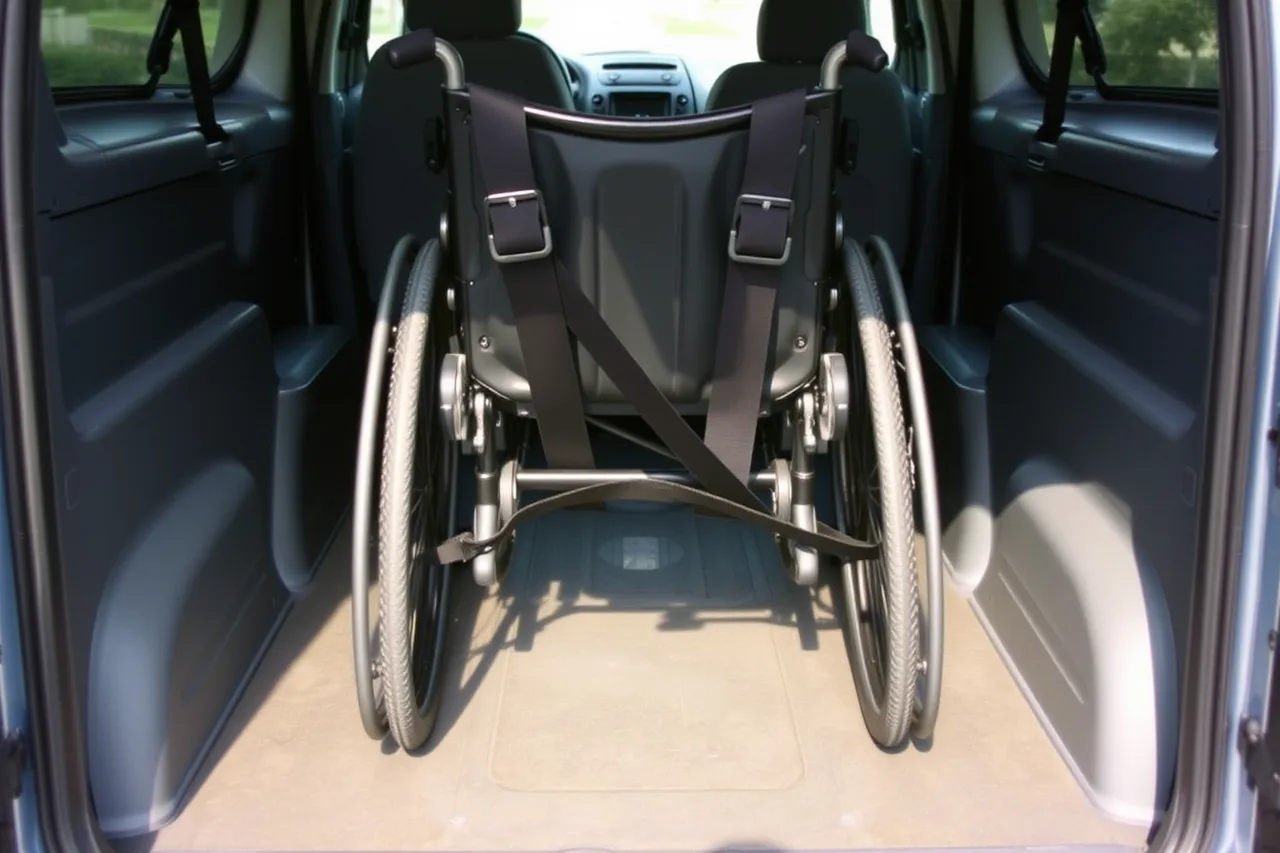
Securement is the first thing inspectors check. Federal rules require a four-point tie-down: two straps to the front frame, two to the rear. A lap and shoulder belt must anchor to the vehicle, not the wheelchair. The chair's own belt does not satisfy the rule.
Older vans usually fail on aisle width rather than lift capacity. A wheelchair needs a clear path from the door to the securement spot, and below 30 inches the rider cannot reach the tie-downs. That is a compliance failure even when the lift works.
Door header height fails just as quietly. A low roofline may not clear a power chair with a tall back, and brokers in Arizona and Florida see more tall power chairs than fleets expect. Measure the tallest chair your contract serves before you buy anything.
Securement straps wear out faster than the vehicle. A frayed strap or one that loses ratchet tension fails inspection, so keep spares on the van and log every replacement. Treat that as routine NEMT equipment checklist work, not an upgrade.
Driver assistance and service animal rules
Driver assistance is a duty, not a courtesy. A driver must help the rider enter and exit, operate the lift or ramp, and secure the wheelchair. The same duty covers a walker, a cane, or luggage the rider needs for the trip. Refusing because of a company policy is a violation.
Drivers cannot require a rider to transfer out of a wheelchair if the vehicle can carry the chair, and cannot ask the rider to leave the chair at the curb. Asking the chair's weight is allowed when the lift has a rated limit. Weight alone is never grounds for a blanket denial.
A service animal is a dog trained to do work or perform a task for a person with a disability. The handler does not need papers or a vest.
The driver may ask only two questions: is the dog required because of a disability, and what work or task has it been trained to perform.
The full rule is at ADA Requirements: Service Animals | ADA.gov.
The animal rides in the vehicle, not in a crate, unless the crate is how the handler normally travels. It sits on the floor or the handler's lap and cannot block the aisle or the securement area. No pet fee, no cleaning deposit.
An emotional support animal is not a service animal under the ADA. Many NEMT contracts still allow them, but that is a contract term rather than a federal right. Train drivers on the difference so they neither turn away a legitimate service dog nor accept a pet that breaks policy.
Communication access belongs in the same training. Riders who are deaf or hard of hearing may need text updates or a relay call, and the FCC accessibility program covers relay services and equipment. Its resources are at Accessibility | Federal Communications Commission. Dispatch software that only places voice calls will fail these riders.
What an accessible van costs to run
A new cutaway with a lift can run $70,000 or more. A used accessible van may cost half that, but its lift may be near the end of its service life. The new vs used NEMT equipment comparison matters most for the lift and the floor structure, which are the two parts that decide whether the van earns.
Lift maintenance is the cost owners underestimate. A power lift needs service every few months, and a failed lift takes the van out of accessible service. Budget for a spare accessible vehicle or a standing partnership with another provider. A one-van accessible fleet is a single breakdown away from a contract breach.
Long rural trips add fuel and mileage on top of that. The IRS mileage rate and ordinary business deductions apply to NEMT vehicles used for business, including accessible vans. Track trips by vehicle so you can defend both the deduction and the utilization rate. Low utilization, not lift repair, is the main reason accessible vans lose money.
Routing decides as much as the vehicle does. Accessible trips take longer to load and unload, so a route packed with too many stops runs late and pressures the securement checks. Build extra minutes into every wheelchair trip and train dispatchers to protect them.
Fleet mix should follow the contracts you actually hold. If most trips are ambulatory, a few accessible vans plus sedans may cover the work. Dialysis and behavioral health contracts push wheelchair demand up. Review trip denials monthly to see whether the mix is wrong.
Some states and brokers pay higher rates or offer grants for accessible vehicles. Check your state Department of Health and Human Services and your MCO contracts, because a small rate bump can cover the lift maintenance that otherwise eats your margin. The facility and equipment guide covers the build-out side.
Documentation and training that survive an audit
Documentation is what survives an audit. Keep the lift inspection report, the securement strap log, and the driver training record for each vehicle. Brokers and state agencies ask for these during readiness reviews, and missing paperwork can suspend a contract even when the vehicles are fine.
Training must cover lift operation, securement, assistance, and service animals, and it should be hands-on rather than video alone. Drivers should practice with a real wheelchair and a real lift before they carry a rider. Retrain after any equipment change or incident.
- Lift and ramp inspection log, current within the required interval
- Four-point securement straps inspected and logged
- Driver training records for lift, securement, and assistance
- Service animal policy signed by every driver
- Trip denial log reviewed monthly
- Vehicle registration, insurance, and DOT for-hire compliance current
- Contract-specific accessibility terms on file
Hiring is part of compliance. The Department of Labor explains the employment rights of workers with disabilities, which matters if you hire a driver or dispatcher with a disability. See Employment of Workers with Disabilities | U.S. Department of Labor. Accommodation requests are normal and should never be treated as a burden.
OSHA rules cover driver safety during lift use and securement, and back injuries from manual transfers are common. Provide lift aids and train drivers never to lift a rider by hand. A safe driver is also a compliant driver.
Buy equipment with parts and service nearby. A lift brand with no local technician keeps your van parked for weeks. Compare suppliers on service network, not sticker price. The NEMT equipment brands list is a starting point for that review.
Common questions
Do ADA NEMT vehicle rules apply to private providers?
Yes. Title III covers private transportation providers, and Medicaid or broker contracts usually add the same duties. The rules apply regardless of who pays for the trip.
Can a driver charge extra for a wheelchair or a service animal?
No. Surcharges for accessibility features or a service animal are prohibited. Under the contract, the ride costs the same as an ambulatory trip.
What can a driver ask about a service animal?
Only two questions: whether the dog is required because of a disability, and what task it performs. No papers, no vest, no certification.
How often must a lift be inspected?
Follow the manufacturer's interval and your contract terms. Many fleets inspect monthly and log every check. A failed lift removes the van from accessible service.
Is a ramp as good as a lift?
For many riders, yes, and it is faster to deploy. A lift is still needed when the rider cannot board at ramp slope or when the vehicle floor is too high.
What happens if an audit finds missing documentation?
The broker or state agency can suspend trips or the contract until you fix it. Keep logs current and stored where you can produce them within a day.