Guides
NEMT Wheelchair Securement Rules by State: A Driver's Checklist
NEMT wheelchair securement rules by state add steps beyond federal ADA. This driver's checklist covers sequence, movement test, and technician handoff.
What to take away
- NEMT wheelchair securement rules by state add steps beyond the federal ADA floor: four-point tie-downs and a three-point occupant belt for forward-facing wheelchairs.
- States layer inspection, paperwork, and securement checks on top of the ADA baseline, so a driver's checklist must change at state lines. California, New York, Texas, Florida, and Michigan each add a different check.
- The decisive step is removing slack after all four tie-downs are connected, then testing movement.
- Stop and call a mobility technician when a chair lacks unbroken crash-tested tie-down points or the occupant cannot breathe without belt pressure.
Before you touch a strap
Before the first strap is connected, the vehicle floor track and the wheelchair must meet the federal baseline. The ADA wheelchair securement requirements set the floor, and Federal wheelchair securement systems set the crash force standard.
Check that the floor track bolts are tight, the straps are not cut, and the chair has four welded tie-down points. A scooter without crash-tested tie-down points should be treated as a transfer, not occupied.

State rules add more, but the securement method below stays the same. See the wheelchair-accessible vehicle rules for the federal design baseline before a state inspection.
The securement sequence
- Set the wheelchair brakes and position the chair facing forward inside the marked floor area.
- Attach two front hooks to the forward frame points, then two rear hooks to the rear frame points.
- Attach the vehicle lap and shoulder belt across the occupant, keeping the lap belt low on the pelvis.
- Pull each of the four tie-down straps tight until all visible slack is gone. This is the decisive step.
- Push the chair from the side and front at hip height. It must move less than two inches in any direction.
The step that decides the result
Step 4 decides whether the chair stays put. If any strap keeps slack, the chair rotates in a sudden stop, and the occupant belt cannot do its job.
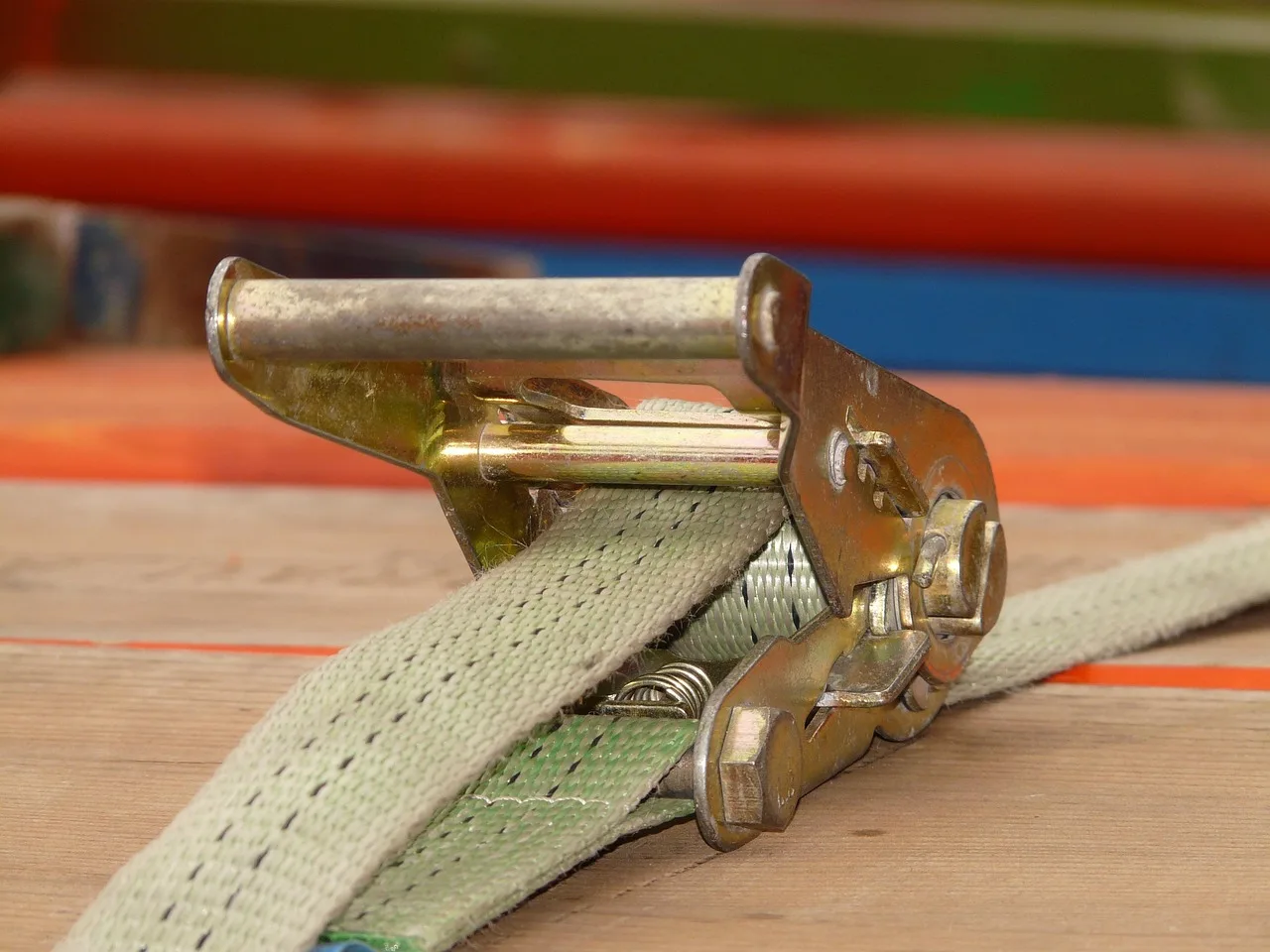
To tell it came out right, crouch beside each cam buckle and pull the loose end until the webbing is straight and firm. A twisted strap counts as slack because the twist cuts load capacity. Do not use a strap that is frayed or has a cracked buckle.
How to check each step came out right
- All four hooks are closed around welded frame points, not wheels or folding crossbars.
- The shoulder belt crosses the collarbone and the lap belt sits on the pelvis, not the stomach.
- The chair moves less than two inches when pushed hard from the side and front.
- The chair frame is not bowed or cracked at any tie-down point.
- The occupant can reach the emergency release and says belt pressure is comfortable.
Owners who want a full audit can use the Nemt quality control list.
Securement Step Verification
- All four hooks closed around welded frame points
- Shoulder belt crosses collarbone, lap belt on pelvis
- Chair moves less than two inches when pushed
- Chair frame not bowed or cracked at tie-downs
- Occupant can reach emergency release comfortably
What to do when a step goes wrong
The most common failure is a tie-down strap that slips during the movement test. Recovery: release that strap, pull it free, and check the cam lock for dirt or a bent pawl.
If the cam lock is clean, move the hook to a different floor track position at least six inches away and re-tighten. Test again. If the same strap slips twice, replace it from the spare kit before leaving the curb. Do not stack extra hooks on one anchor because that concentrates force.
Drivers who see this repeat failure should review the nemt employee training checklist for hands-on re-tension practice.
When to stop and hand it to a professional
Stop the job and call a certified mobility technician when any of these conditions exists. The wheelchair has cracked or missing tie-down brackets. The floor track anchor is loose enough to lift with two fingers. The occupant reports pain or numbness after the belt is adjusted.
Also stop if the chair moves more than two inches after three re-tension attempts. That condition means the vehicle securement geometry is wrong, and a technician with load-testing equipment needs to re-anchor the track.
State variations that change the checklist
Federal ADA is the floor, but state NEMT inspection rules add steps. No single federal list covers every state addition. Check your state Medicaid agency's NEMT provider manual before each route. The table below shows examples from seven states.
| State | State rule or inspection addition | Driver check |
|---|---|---|
| California | California Highway Patrol (CHP) terminal inspection covers wheelchair lifts and securement equipment for general public paratransit vehicles. | Test the lift emergency release and floor anchor bolts. |
| New York | New York Medicaid NEMT requires a written daily vehicle inspection record for securement and lift equipment. | Keep a signed securement checklist on board and dated. |
| Texas | Texas Health and Human Services Commission (HHSC) Medicaid NEMT vehicle inspection requires tie-downs to meet the state-approved list and have no cuts. | Confirm tie-downs are on the list and uncut. |
| Florida | Florida Agency for Health Care Administration (AHCA) Medicaid NEMT coverage policy requires providers to follow ADA securement and keep driver training records. | Carry the driver training certificate and vehicle inspection record. |
| Michigan | Michigan Department of Health and Human Services (MDHHS) NEMT manual requires a pre-trip inspection of wheelchair tie-downs and occupant belts. | Record the pre-trip securement check before each trip. |
| Pennsylvania | Pennsylvania Department of Human Services (DHS) MATP requires vehicles to pass PennDOT annual safety inspection and providers to follow ADA securement. | Verify the current PennDOT inspection sticker and securement check. |
| Illinois | Illinois Department of Healthcare and Family Services (HFS) Medicaid NEMT manual requires providers to keep vehicle inspection records and follow ADA securement. | Carry the current inspection form and securement log. |
Because rules shift at state lines, see Medicaid NEMT rules change before a cross-border trip.