Guides
NEMT employee training: stop conditions and records
NEMT employee training for the moments that matter: six stop conditions drilled by asking, records captured at the door, and who observes and when it is redone.
What to take away
- The stop conditions are the most important competency and the one most often left out. A driver who knows when to call is worth more than one who never needs to.
- Drill each condition by asking, not by handing over a document: who the driver calls, in what order, and what gets recorded.
- Records are captured at the door. A record completed at the end of a shift is a record reconstructed from memory.
- Name the observer and the date for every drill, and re-observe when the equipment changes, when a driver moves to a different vehicle, and after any incident.
- Which credentials and checks are required is set by your state program, its broker, your contract and your insurer. This list is competencies, not compliance.
Why the stop conditions get their own training
Teach the stop conditions before anything else about trips, because they decide what a driver does when the booking and the doorstep disagree. A driver who knows when to call is worth more than one who never needs to, and nobody learns that by reading it.
Training records in this trade usually record attendance. Attendance proves somebody was in a room. What you need to be able to show, to yourself and to anyone who asks, is that a named person did a specific thing correctly while somebody watched.
So every drill below has one result: observed by whom, on what date, on which vehicle. Six conditions come first, then the records they generate.
The six stop conditions
- The chair or the passenger's needs do not match the booking
- The assistance required exceeds what was agreed
- The access route is not safe or not passable
- Equipment fails, with or without a passenger aboard
- An incident of any size occurs
- A will-call has not been received by the time your procedure names
For each, the driver should be able to say who they call, in what order, and what they record. Test it by asking, not by handing over a document. A driver who can answer on the spot, without looking anything up, has learned it.
Drill one: the booking does not match the chair
Put a chair or a need in front of the driver that the booking did not mention, and watch what happens next. The right move is to stop and call before anything is secured or lifted. The wrong one is to improvise a securement from memory.
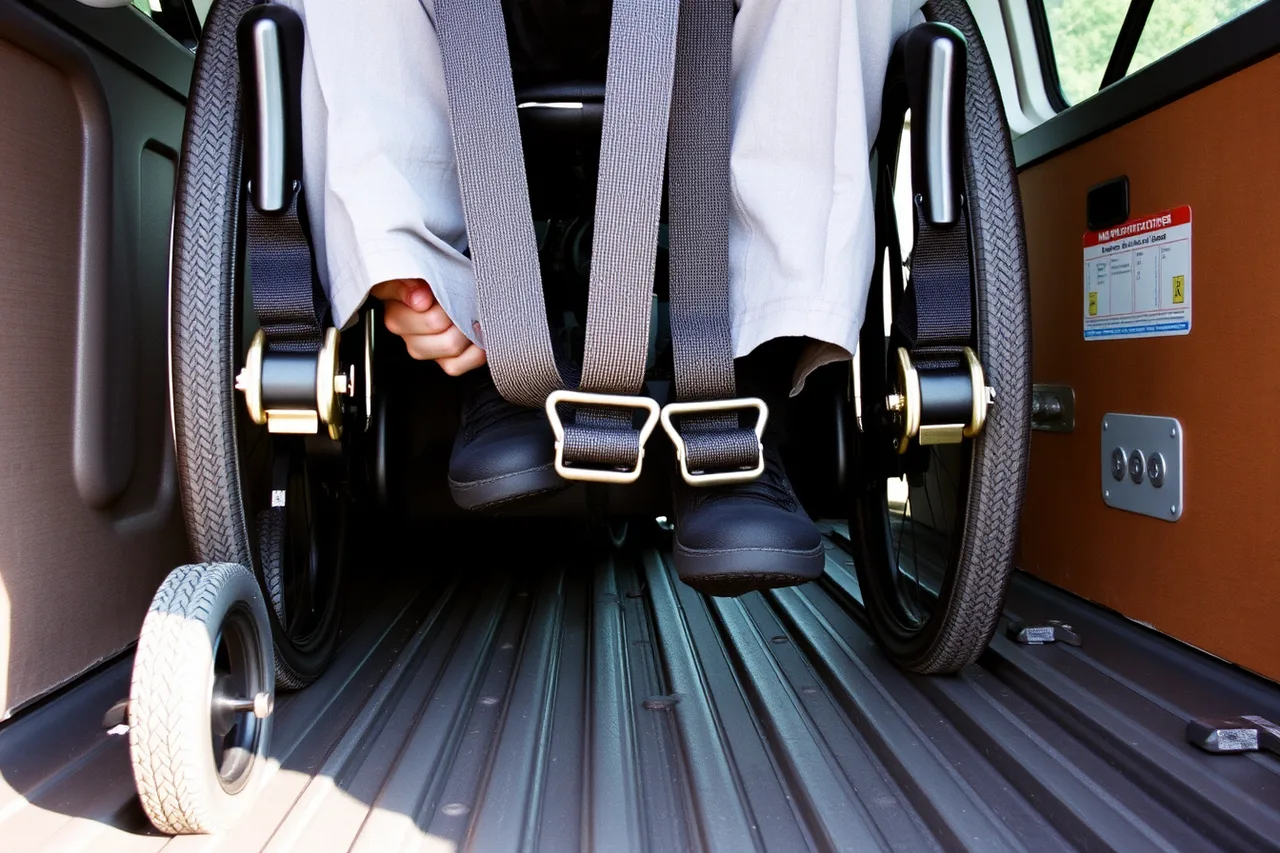
In a full training ladder this is stage one, signed before anyone is carried, because a securement done from memory on an unfamiliar chair is the failure mode that matters most. The driver finds the maker's instructions in the vehicle and follows them for each chair type you carry. The securement rules by state add a local layer on top.
Do not teach securement from the federal cargo securement rules or from anything derived from them. Those govern freight restraint, and a passenger is not freight. The controlling documents are the instructions from the makers of the tie-down system, the conversion and the wheelchair.
Drills two and three: too much assistance, or an unsafe route
Both conditions test the same habit: saying that something is not safe to attempt alone, and calling. The refusal is a competency in its own right.
A driver who has practiced it, with a colleague acting the part, will do it under pressure. One who has only been told about it will not.
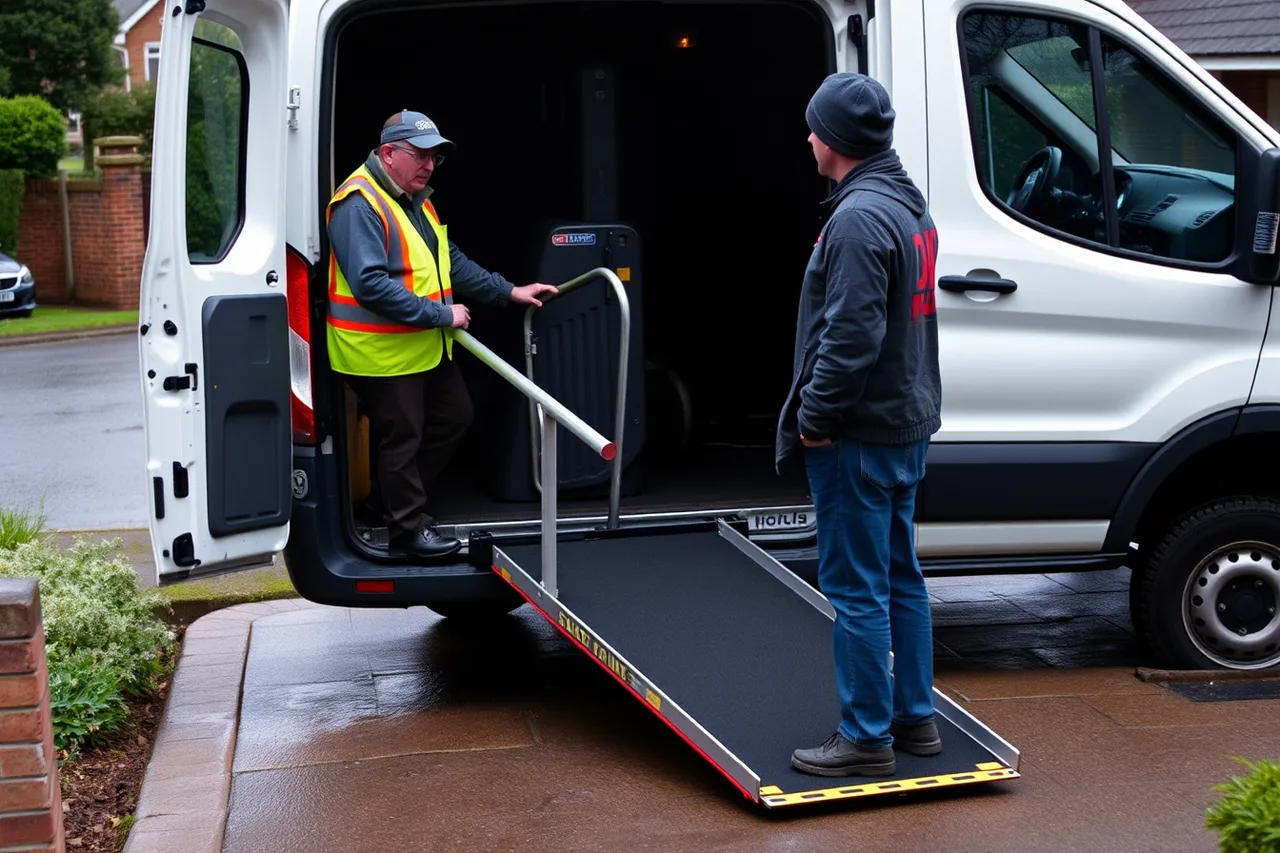
Run the unsafe-route drill on a real slope of the kind your routes contain, with a doorway that is awkward and, where your climate has them, wet and cold conditions. Demonstrate the written rule on stairs, meaning the refusal as well as the attempt.
For the assistance drill, set the booking at one level of help and the doorway at another. The driver should record the assistance level actually delivered, including where it differed from the booking, and say who was told.
Drill four: the passenger declines or is distressed
A passenger may refuse a trip. It is their decision. The drill is the sequence that follows: record, notify, leave, and never persuade. Observe it rather than discussing it, with a colleague acting the part.
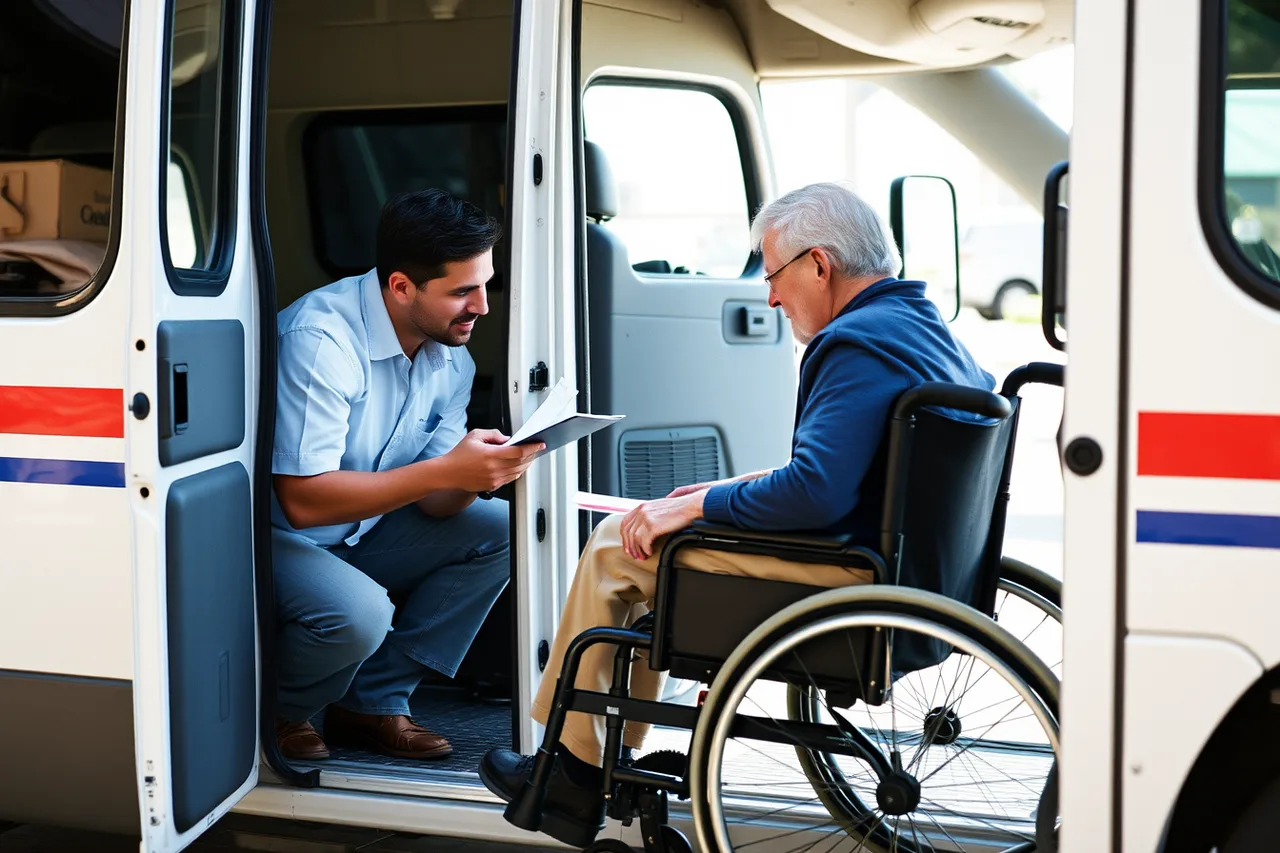
A driver should also be told plainly that judging whether somebody is well enough to travel is not their role and not yours. It belongs to the people responsible for that person's care. Add the privacy rules to the same drill: what is discussed, with whom, and what is not repeated, as set out in HIPAA for NEMT drivers.
Drills five and six: equipment, incidents and will-calls
For equipment failure, the driver demonstrates the manual override or failure procedure for the lift, first with no passenger aboard and then as a described case with one aboard. What they record afterwards feeds the vehicle maintenance log.
An incident of any size triggers the same call-and-record sequence, and a will-call that has not been received by the time your procedure names triggers a call, not a wait. Ask the driver to say each sequence aloud, with the times they would write.
Records captured at the door
- Times at both ends captured at the door, not later
- Mileage recorded as your process requires
- Assistance level actually delivered recorded accurately, including where it differed from the booking
- Exceptions written up while fresh
- Whatever confirmation your payer requires obtained correctly
Records completed at the end of a shift are records reconstructed from memory, and reconstruction is where disputes and audit findings come from. Payers care about the detail: the CMS Medicaid NEMT booklet says state Medicaid payment rules may take into account loaded mileage, location, and wait times.
Observe the record being made at a simulated delivery, not described afterwards. The record is the one drill whose output you can inspect later.
Who signs each drill, and when it is redone
| Drill | Observed by | Redone when |
|---|---|---|
| Booking and chair mismatch | Someone competent on that exact equipment | Vehicle or equipment changes |
| Assistance and unsafe route | Experienced driver or supervisor | After an incident or near miss, and periodically |
| Declines and distress | Supervisor, on a real shift | Periodically, and after any complaint about manner |
| Equipment, incident, will-call | Owner or supervisor | Whenever a procedure changes |
| Records | Whoever handles billing | When the payer's requirements change |
Naming the observer matters more than naming the trainer. The observer is the person whose judgment you are relying on if anyone ever asks.
Keeping the schedule
Set a re-observation schedule and keep it: when a driver moves to a different vehicle, when equipment changes, after any incident or near miss, and periodically for anything where an error hurts somebody.
Record who observed, when, and what they saw. That record is worth having for its own sake, and it is also what an insurer or a payer will ask about after something goes wrong.
Where this connects
The role these drills belong to is defined in the hiring and training guide. The equipment they attach to is covered in the fleet and premises guide.
Training time belongs in your labor arithmetic. The Department of Labor's hours-worked fact sheet says attendance at training programs need not be counted as working time only if four criteria are met. They are that it is outside normal hours, it is voluntary, not job related, and no other work is concurrently performed.
Common questions
How long should the drills take?
As long as each one takes to sign off honestly, which varies by person and by equipment. Setting a fixed number of days encourages signing off on the day rather than on the observation.
Can an experienced driver skip a drill?
They can skip nothing that is specific to your equipment. Experience usually makes the drill faster, not unnecessary.
Who should do the observing?
Someone competent at the task themselves, and named. If that is only you, it is only you, and the schedule has to allow for it.
What if a driver cannot pass a drill?
Then they do not do that work yet. Some competencies can be worked toward; some are the job. Deciding which in advance is fairer than deciding it after somebody has started.