Guides
What it actually costs to start an NEMT business, line by line
Real dollar lines for an NEMT startup, from a wheelchair van and its conversion to insurance, credentialing and the receivable gap that sinks new operators.
What to take away
- The largest line in starting an NEMT business is the wheelchair-accessible van, roughly $45,000 to $75,000 converted. The conversion alone is $18,000 to $35,000 of that, and BraunAbility and Vantage Mobility International (VMI) build most of it.
- Commercial auto and general liability for NEMT commonly start near $6,000 to $12,000 a year per vehicle, and the premium is priced on your drivers and your radius.
- The receivable gap, not the purchase, is where new operators fail. Medicaid MCO claims and broker invoices at Modivcare, MTM and SafeRide Health can take 30 to 90 days to pay.
- Every figure below is illustrative. Your dealer, upfitter, broker and state fee schedule set the real numbers, and you should collect all four before signing anything.
- Budget the gap as working capital, separately from setup, and fund it before the first trip rather than after.
A startup cost article that gives you a range is usually telling you the author does not know your state, your vehicle or your payer mix. Fair.
What follows are the actual lines, with typical figures attached so you have something to compare a quote against. Treat every number as a starting point for a conversation with a dealer, an upfitter, an insurance broker and your state Medicaid agency, not as a price you can rely on.
The vehicle
A new wheelchair-accessible van, converted and delivered, generally lands between $45,000 and $75,000. A used one with 80,000 to 120,000 miles runs $25,000 to $45,000. The spread depends more on the conversion than the chassis.
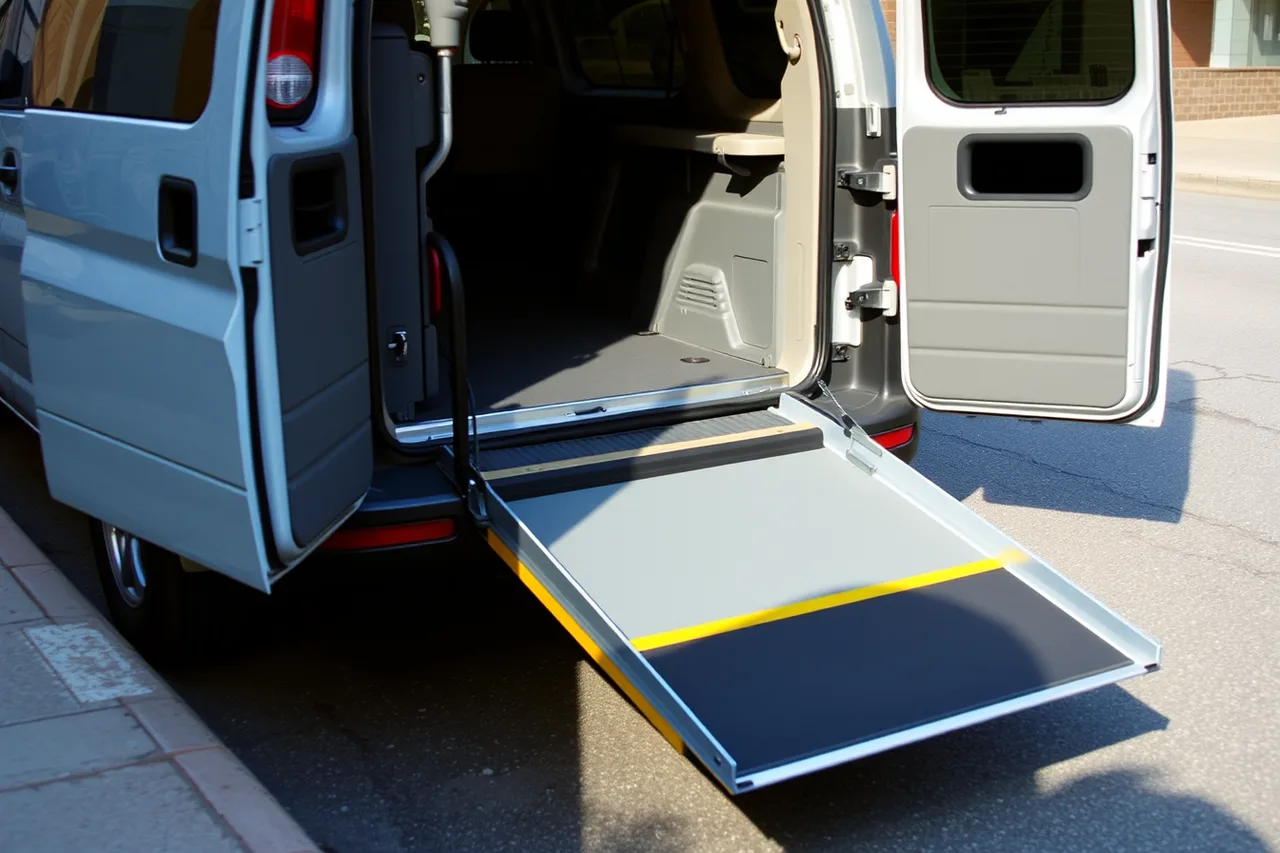
The base vehicle is the smaller half of that. A new Toyota Sienna or Chrysler Pacifica minivan chassis is roughly $30,000 to $40,000.
The conversion adds $18,000 to $35,000 on top. It includes a lowered floor, ramp or lift, tie-down system, and reinforced structure.
A rear-entry ramp conversion sits at the low end. A side-entry power ramp with a kneeling system sits at the high end. BraunAbility works out of Winamac, Indiana, and VMI out of Phoenix, and both sell through dealer networks that include MobilityWorks and Rollx Vans.
Stretcher work changes the math. A cot and mount adds $8,000 to $15,000, and the vehicle class usually moves up to a full-size van or cutaway. That pushes the total past $80,000. Frazer and American Emergency Vehicles build stretcher-capable units on cutaway chassis.
Do not buy the chassis first because it looked affordable. Buy the conversion and the chassis as one quoted package, and ask the upfitter for lead time. A twelve-week queue means twelve weeks of insurance and storage before the vehicle earns anything.
Licensing, registration and credentialing
State business registration and an LLC filing typically cost $50 to $500, depending on the state. Your state's NEMT or livery permit, where one is required, is often $100 to $500 a year. A livery surety bond, required in some states, typically runs $100 to $300 a year for a $10,000 bond.
The expensive credentialing line is not the fee. It is the time. Medicaid enrollment and MCO credentialing can take 60 to 120 days, and you are paying insurance and fixed costs through all of it.
Confirm the current requirements with your state Medicaid agency and each MCO directly, because the process varies by state and by plan. The plans you credential with are the Medicaid managed care organizations in your state, among them Molina Healthcare, Centene's WellCare plans, UnitedHealthcare Community Plan and Elevance Health.
An NPI from NPPES is free, and many states require one before you can bill. Several plans collect credentialing documents through CAQH ProView, which is also free to providers.
Driver requirements add up. A commercial driver's license where required, a DOT medical card, a background check and a drug test commonly total $150 to $400 per driver. Passenger endorsement and CPR or first aid certification are separate in many states.
Most converted minivans sit well below the 26,001 pound threshold that triggers the federal CDL rule. Your state may still require its own permit or endorsement, so check the license class before you hire.
Insurance
Commercial auto for a wheelchair-accessible vehicle typically runs $4,000 to $8,000 a year. General liability adds $1,000 to $3,000. Professional liability, sometimes called errors and omissions, adds $500 to $2,000.
A single vehicle commonly carries $6,000 to $12,000 a year in insurance. The premium moves with several factors:
- your driving record
- your radius of operation
- your driver ages
- whether you carry Medicaid work
A broker who writes NEMT policies, such as Alteris Insurance Services, will price it in a day. A general agent will not.
Cover usually has to be in force before you can register the vehicle or sign a facility contract, so this cost lands early. Ask for the amount payable before coverage starts, not the annual premium.
Equipment, securement and software
Q'Straint and Sure-Lok supply most of the wheelchair tie-downs and occupant belts upfitters install. A full set of four tie-downs with lap and shoulder belts typically runs $150 to $400.
Securement straps, a spare set, a fire extinguisher and a first aid kit typically total $250 to $650. Cleaning supplies and a phone mount add $50 to $150, so the whole small-lines block comes to $300 to $800.
A tablet or mounted device for dispatch and electronic trip logs runs $200 to $600, plus a data plan at $30 to $80 a month.
Software is a subscription, not a purchase. NEMT dispatch and billing platforms commonly run $50 to $200 per vehicle per month, and the price scales with features like Medicaid claim submission, GPS tracking and driver apps.
RouteGenie sells dispatch and billing aimed at NEMT operators, including Medicaid claim submission. EverTransit bundles scheduling, driver apps and billing per vehicle. TripSpark sells scheduling and dispatch to larger paratransit and NEMT fleets. Read the contract term before you commit, because some platforms bill annually.
The receivable gap
This is the line that closes businesses. You deliver the trip today and get paid in 30 to 90 days, depending on the payer.
Medicaid MCO claims typically pay in 30 to 60 days once you are credentialed and billing cleanly. National brokers such as Modivcare, MTM and SafeRide Health often pay in 14 to 30 days, and Access2Care works on similar terms. Facility accounts vary widely, and private-pay is immediate.
Work it out per payer. Take your expected daily billing for that payer, multiply by the days between trip completion and payment, and add the results. A mix with one slow payer in it produces a much larger gap than an average suggests, which is why the average is the wrong tool.
Ask each broker and facility directly what their cycle is. Then track your own from month one, because your clean-claim rate drives your real number.
A worked example
A single wheelchair-accessible van, one driver, ambulatory and wheelchair trips, Medicaid MCO and one facility account.
| Line | Low | High |
|---|---|---|
| Base vehicle (new Toyota Sienna or Chrysler Pacifica) | $30,000 | $40,000 |
| Conversion (BraunAbility or VMI) | $18,000 | $35,000 |
| Equipment and securement (Q'Straint or Sure-Lok) | $300 | $800 |
| Licensing and registration | $200 | $1,000 |
| Insurance, first year | $6,000 | $12,000 |
| Professional fees | $500 | $2,000 |
| Software, first year (RouteGenie, EverTransit or TripSpark) | $600 | $2,400 |
| Setup total | $55,600 | $93,200 |
Then add working capital. If your monthly fixed costs are $2,500 and you pay one driver $3,500 a month, that is $6,000 a month. Fund three months before receipts arrive and you need $18,000 more, plus whatever the receivable gap holds.
Total realistic startup for one vehicle: roughly $75,000 to $115,000.
Where this fits
Build the setup total and the working capital total separately, and fund the second one first. The sequencing is set out in the four gates before opening, and the numbers belong in the assumption register described in what a plan for this trade should contain.
The vehicle and conversion decision is treated as a fleet question in the guide to vehicles and premises, and the wider trade context sits in the owner's guide to the business.
Federal registration and tax steps follow the ordinary path for any new business. The IRS material on starting a business and the Small Business Administration's guidance for new owners cover the federal side.
The Centers for Medicare and Medicaid Services page on the transportation benefit explains how states administer the benefit. Ask your state and its brokers about payment terms. Do not look for a national figure.
Common questions
Can I start cheaper with a sedan and ambulatory trips only?
Yes, and the setup total drops to roughly $15,000 to $30,000. But ambulatory work is where most competitors already are, so your rates are lower and your receivable gap is the same length. Cheaper entry and easier entry are the same thing, which is the problem.
Is leasing better than buying?
Leasing moves the vehicle cost out of setup and into monthly fixed costs. That helps if your constraint is cash at signing and hurts if your constraint is monthly cash flow. Price both and compare setup plus twelve months of payments under each.
What if I have no quotes yet?
Leave the line blank and say so. A named gap is useful to a lender or a partner. A borrowed number from another state is worse than no number, because it will be treated as evidence.
How much reserve is enough?
Enough to cover the receivable gap plus the months of wages and fixed costs you honestly expect before receipts catch up. If that number is uncomfortable, shorten the receivable cycle or start smaller. Do not shrink the reserve.