

Guides
NEMT startup: choosing modes and trip patterns
NEMT startup planning: choose a service mode, plan for standing orders and will-call returns, and separate the booking, rider and payer roles.
What to take away
- For an NEMT startup, the appointment is the product. A trip that arrives after the slot has gone has failed even though the vehicle completed it.
- Ambulatory, wheelchair and stretcher work are three businesses sharing one name. Different vehicles, different crew counts, different minutes per pickup.
- Whoever books the ride is usually not the person riding, and neither is usually the party that pays. Separate those three before you quote anything.
- You sell vehicle hours. Loading, waiting and driving back empty consume them at exactly the same rate as a loaded mile does.
- Nothing on this page states a coverage rule, a license condition or a rate. Those come from your state Medicaid agency or the broker it contracts with, your state transportation regulator, and your own insurer.
People come to this trade from two sides. Some drove for someone else and think the office side is easy. Some ran a business and think the driving is. Both misjudge the same thing.
The difficulty sits between them: a promise that one named person will be at one door at one time, three mornings a week, for as long as the treatment continues.
The four questions that set the shape of the business
Answer these before you look at a vehicle. Each one closes off options that would otherwise stay open for a year and cost you money the whole time.
- Which modes will you carry? Ambulatory only is a low-capital entry and the most crowded. Adding wheelchair changes the vehicle, the training and the time on scene. Adding stretcher changes the staffing model, because a stretcher trip is not a one-person job.
- Which trip patterns will you accept? Standing orders repeat on a fixed rhythm and fill a schedule. Will-call returns, where the discharge time is unknown until someone calls, do not fit a schedule at all.
- Who are you contracting with? A broker, a facility, a health plan and a family paying directly are four different sales processes and four different payment behaviors.
- How far will you travel from base? Your service radius sets your empty mileage, and empty mileage is the cost nobody budgets for.
The Small Business Administration's business guide covers the general formation and planning steps that sit underneath all four. It says nothing specific to medical transport, which is the point: those parts are ordinary, and the trade-specific parts below are not.
Three modes, three different operations
Three modes, three operations
Ambulatory
- Vehicle
- Sedan or minivan
- Typical crew
- One
- Time on scene
- Shortest
- What sets the time
- Walking pace and doorways
- Capital per vehicle
- Lowest
Wheelchair
- Vehicle
- Ramp or lift conversion
- Typical crew
- One, sometimes two
- Time on scene
- Longer, and highly variable
- What sets the time
- Ramp deployment, securement, doorway width
- Capital per vehicle
- Higher
Stretcher
- Vehicle
- Van built for a cot
- Typical crew
- Two
- Time on scene
- Longest and least predictable
- What sets the time
- Transfer, stairs, elevator access
- Capital per vehicle
- Highest
Read the table as a warning about scheduling rather than a shopping list. A dispatcher who plans wheelchair pickups on ambulatory timings will run late by mid-morning every day, and no amount of driver effort recovers that.
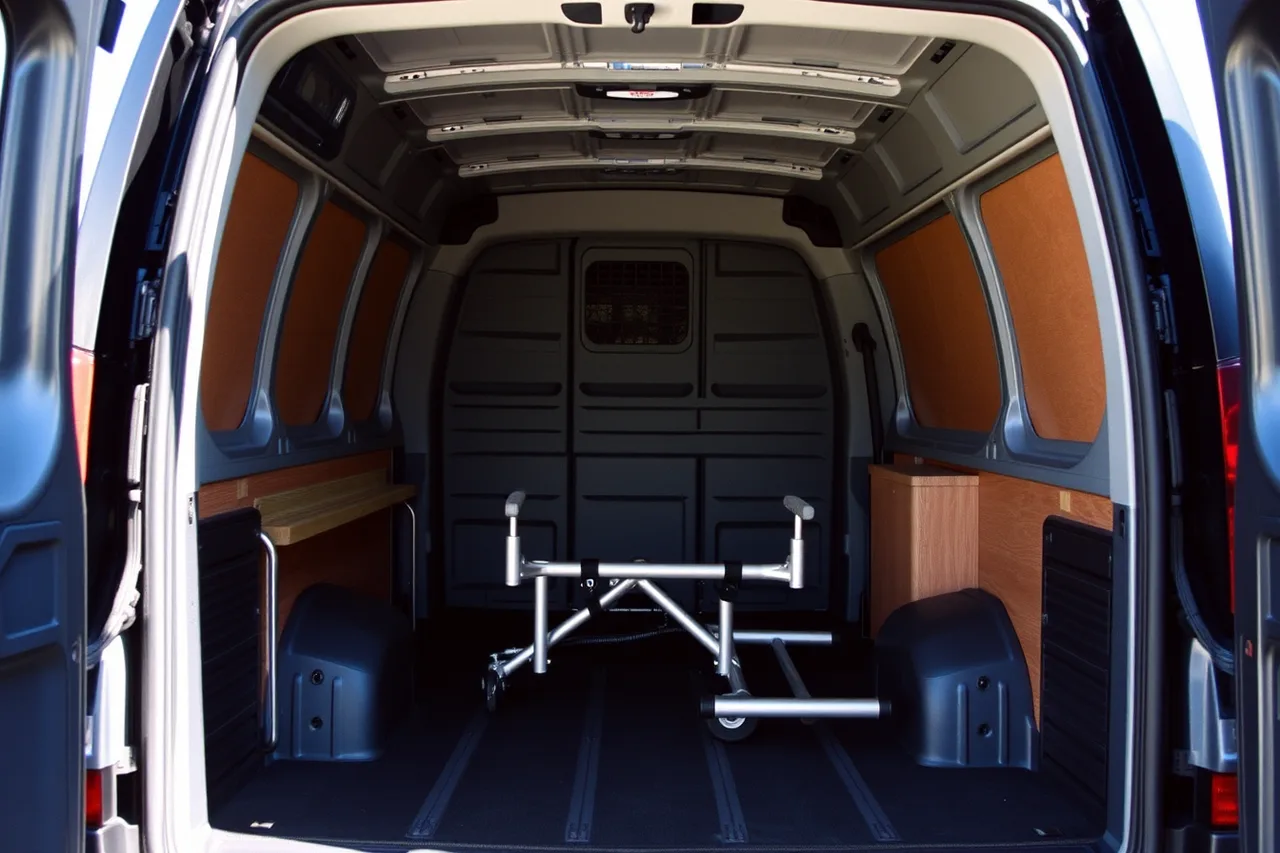
Securement equipment is where owners most often assume a rule exists they have not read. The instructions that matter come from the manufacturers of the lift, the tie-down system and the wheelchair, plus what your state program and contract require.
Federal cargo securement rules do not govern passenger wheelchair securement. The Americans with Disabilities Act (ADA) is the federal law to check for applicable disability-access requirements, including rules for accessible transportation and service animals. Confirm how those requirements apply to your service and contract rather than reasoning by analogy from a cargo standard, which is how a chair gets secured the wrong way.
Who books, who rides, who pays
This structural fact separates medical transport from every other kind of driving work. Write it down before your first sales call.
Who books, rides, pays
- Booker: facility, clinic, case manager, family
- Rider: the patient
- Payer: Medicaid, broker, plan, facility, family
- Each party measures you differently
Each party measures you differently. A discharge planner looks at how fast you answer a will-call. A clinic scheduler checks whether the same patients arrive on time on the same days.
A broker wants documentation, and the billed trip to match the authorized one. A family cares how their mother was treated at the door.
The federal reference point for the public side of this is the Centers for Medicare and Medicaid Services page on non-emergency medical transportation, which describes how the benefit is arranged and then sends you to the state. The state is where the answer actually lives. Read it for the structure and then call your own state agency for the substance.
What you are really selling is a vehicle hour
New owners price by the trip or by the mile because that is how the invoice reads. The cost sits somewhere else.
A vehicle costs you money from the moment the driver clocks in until the moment they clock out. That clock keeps running during loaded driving, loading, waiting and the empty drive back.
What a vehicle hour covers
- Driving with a passenger aboard
- Driving empty to the next pickup
- Getting a passenger from door to vehicle
- Waiting at a facility for discharge
- Sitting outside a no-show patient's house
Only some of that time appears on most invoices. The gap is the single most common reason a busy operation loses money. It is why the return trip that waits, and the cancellation that arrives too late to backfill, deserve their own line in your thinking rather than a shrug.
A useful discipline for the first year: at the end of each day, write down the number of hours each vehicle was staffed and the number of trips it completed. The ratio between those two numbers will teach you more about the business than any single trip's revenue.
Getting the sequence right before the first trip
Some of this is ordinary business setup and some of it gates everything else. The order matters because several items have waiting periods that do not overlap.
Sequence before the first trip
- Settle legal entity and tax registrations
- Ask state Medicaid, broker and regulator separately
- Talk to an insurance broker early
- Buy or convert the vehicle only after steps two and three
- Hire, train, then run unpaid dry runs
- Sign the first contract last
- Settle the legal entity and the tax registrations. The IRS page on starting a business covers the federal side and links the state pieces.
- Find out what your state actually requires of a passenger carrier of this type. Ask the state Medicaid agency, the broker that holds your state's contract, and your state transportation regulator or public utilities commission separately, because they answer different questions and rarely mention each other.
- Talk to an insurance broker who has written this class of risk before, early. Coverage availability shapes which modes you can offer and how quickly you can start.
- Buy or convert the vehicle only after steps two and three, since both can change the answer.
- Hire and train, then run unpaid dry runs on real routes with a colleague in the chair before you carry anybody.
- Sign the first contract last, once you know what you can actually deliver on a bad weather Tuesday.
Staffing costs are the model, not a line in it
In most small operations the driver is also the person who does the lifting, the reassuring and the paperwork. That single fact drives wage levels, turnover, injury exposure and how many trips a day are realistic.
No national figure tells you what to pay in your county. Instead, look up published wage data yourself: the Bureau of Labor Statistics occupational employment and wage tables filter by occupation and metropolitan area, the right resolution for a hiring decision.
Treat that number as a floor for talks with local candidates, not an answer.
What to hand to somebody else
Three things are worth paying a professional for in year one, and none of them are the driving.
The insurance placement: the wording decides what happens after an incident, and a general broker will not know which endorsements this trade needs.
Review the contract before you sign with a broker or facility. The definitions of a completed trip, a cancellation and a wait period are where the money is.
Set up bookkeeping, because payer mix makes receivables complicated in a way a single-payer business never sees.
Common questions
Can I start with one vehicle?
Yes, and most people do. Understand what one vehicle cannot do: it cannot cover a breakdown, it cannot hold a will-call while also running a standing order, and it makes you personally the failure point. Plan the second vehicle before you need it rather than after you lose an account.
Should I start with ambulatory work or go straight to wheelchair?
Ambulatory is cheaper to enter and easier to staff, which is why the competition there is heaviest. Wheelchair work has a higher barrier and steadier demand. The honest answer depends on what your local providers are struggling to get covered, which you find out by asking them rather than by reading anything.
How do I know whether my area needs another operator?
Call the schedulers at dialysis centers, infusion clinics and skilled nursing facilities and ask what happens when a ride falls through. If they describe a routine workaround they have built, there is unmet demand. If they say it rarely happens, believe them.
Do I need to know the coverage rules before I start?
You need to know who to ask, which is not the same thing. Coverage, authorization and documentation requirements are set by your state program and its broker, and they change. Build the habit of confirming with them rather than the habit of remembering.