Guides
NEMT sales: how to sell without overpromising coverage or capacity
An NEMT sales guide to the booker, rider and payer, discovery meetings, scope, credential evidence and honest capacity limits before you win a facility account.
A clinic brings a repeatable request
A community clinic is considering an operator for fourteen one-way wheelchair trips each day. Before discussing a start date, the operator checks who books, who rides, who pays, what fails today, and whether the requested pattern fits staffed vehicles and written service limits.
The first check is to separate the booking, riding, and payment roles. In this case, the clinic scheduler books, a patient rides, and the payer may be a program, broker, health plan, facility, or family member. Those responsibilities can belong to different people, so a booking request does not settle payer requirements.
The booker is whoever arranges the ride, such as a clinic scheduler, hospital discharge planner, case manager, facility administrator, or family member. They want fewer calls and surprises, with clear notice when circumstances change. For the facility, the practical value is relief from a recurring problem in a scheduler's or discharge planner's day, not transport in the abstract.
The patient is the rider. They want courteous treatment, no rushing at the door, and an on-time arrival. They may not choose the operator, but a complaint can end the relationship. Treat the rider's experience as an operating constraint, even when someone else arranges the trip.
The payer may be a state program, a broker administering it, a health plan, the facility, or the family. They want trip documentation that matches the service and an invoice that reconciles. Do not treat the booker's request as confirmation of payer rules: the people and decisions involved can differ.
Three parties, three wants
Booker
- Who they are
- Clinic scheduler, discharge planner
- What they want
- Fewer calls, no surprises
- Their power
- Chooses and books you
Rider
- Who they are
- The patient
- What they want
- Treated well, arrive on time
- Their power
- Can end it by complaining
Payer
- Who they are
- State, broker, plan, family
- What they want
- Docs match trip, invoice reconciles
- Their power
- Decides what gets paid
The Centers for Medicare and Medicaid Services description of the transportation benefit is useful preparation because payer arrangements differ by state. When the clinic explains how its program works, ask for the relevant details rather than filling gaps with assumptions about coverage or payment.
The disruption gives the sales conversation its purpose
With the people identified, the operator asks what happens when a ride fails. The consequences reveal what the booker needs and what the service would have to prevent or communicate clearly; they are more useful than opening with broad claims about vehicles or reliability.
The clinic may describe calls to three operators, a family member sent to collect a passenger, or an appointment moved. Those workarounds show the disruption the clinic wants removed. The seller is addressing scheduler effort, not simply describing a vehicle or making a general promise that every trip will go smoothly.
What bookers really ask
Operators lead with
- Proof
- Years in business
- Capacity
- Fleet size
- Reliability
- Quality commitment
- Money
- Competitive pricing
Booker asks themselves
- Proof
- Will this reduce my calls
- Capacity
- Can they cover Tue and Thu mornings
- Reliability
- What happens when their van breaks
- Money
- Will invoices reconcile without chasing
Replace broad claims with commitments the clinic can check: specified hours and days, a stated mode and assistance level, notice when plans change, and a named contact. The contrast is between what an operator might talk about and what the booker needs to know before trusting the arrangement.
An operator might mention / The booker is trying to find out
- Years in business
- Will this reduce my calls
- Fleet size
- Can they cover Tuesday and Thursday mornings
- Quality commitment
- What happens when their van breaks
- Competitive pricing
- Will the invoices reconcile without me chasing
A site visit replaces estimates with observations
Before offering a rate, the operator collects the clinic's trip patterns, operating conditions, payer documentation, and weak points in its current arrangement. The first meeting is a fact-finding check, not a presentation that ends with a price based on incomplete information.
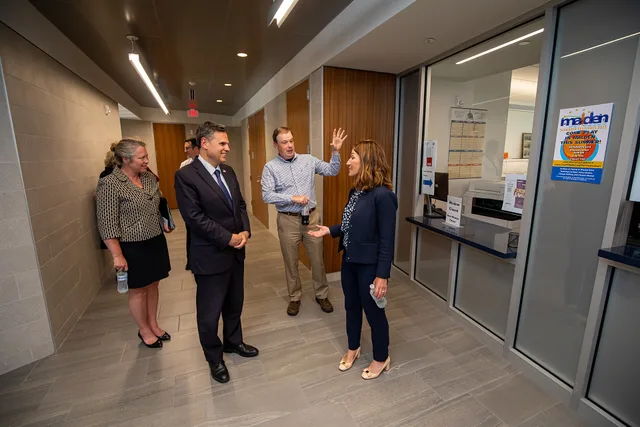
Ask about trip patterns and volumes by mode, appointment times, access conditions at each building, who books and pays, which documents the payer requires, and what has failed with the current arrangement. Visiting the buildings can test whether the described entrance is the actual wheelchair access route.
Walk from the parking area to the passenger pickup point. The route may change the timing more than another round of verbal estimates, so observe the path rather than relying only on the scheduler's description. This gives the operator a sounder basis for judging the work before making a commitment.
Do not give a price during that first meeting. Access conditions can change the arithmetic, and a quote made before checking them may be regretted at the first difficult building. Pulling it back later can cost more goodwill than taking another week to assess the work.
Measured hours expose the capacity boundary
The measured journey gives the operator a daily workload to compare with capacity already committed. For this clinic, that test uses observed door and load times alongside driving time, rather than assumptions about how quickly each trip will run.
Each of the fourteen one-way wheelchair trips takes twelve minutes of measured door and load time plus fifteen minutes driving. That makes twenty-seven minutes per trip and six point three vehicle hours daily. The measured door and load times matter because small timing errors affect the commitment.
One vehicle staffed for eight hours covers this load and nothing else. There is no room for a second account, a late discharge, or a repair. Compare the account's hours with what remains after existing commitments; if service requires another vehicle or driver, say so before proposing a start date.
A small operator can lose a good account by winning it before having the capacity to serve it. Vehicle availability is a fleet question, so check the fleet and premises framework. Staffing cost is the largest input to price; published area wage data from the Bureau of Labor Statistics helps with an initial estimate before local candidates confirm it.
The offer is written around the work
The capacity calculation sets a boundary for the offer, but it does not replace a written scope. The number may be negotiated; the scope determines whether the eventual price covers what the operator has undertaken to do for the clinic in practice.
Scope must answer
- What is included at the door
- What is included inside a building
- The wait rule
- The cancellation window
- What makes a trip billable
- What happens when the day goes wrong
State what help is included at the door and inside a building, set the wait rule and cancellation window, define when a trip is complete and billable, and explain what happens when the day goes wrong. The pricing and profit method should account for the service actually described.
A scope for this clinic should identify:
- Parties and termwho contracts, who is billed, the start date, and the first review date.
- Hours and daysthe days and start and end times covered.
- Geographic areanamed buildings or postcodes, not a radius.
- Mode and assistanceambulatory, wheelchair, stretcher, or escort, and whether the driver goes to the door.
- Booking ruleshow far ahead to book, which channel to use, and how a booking is confirmed.
- Wait and cancellationfree wait time, any charge after it, the no-show definition, and the cancellation window.
- Trip completionwhat makes a trip billable.
- Exceptionswhat happens if a vehicle is off the road or severe weather occurs, and who is called.
- Reportingwhat information is brought to each review and how often reviews happen.
Before sending the scope, ask whether a driver unfamiliar with the clinic could read it and know what to do at the door. If not, the document is only descriptive, and whoever is present may end up deciding what the missing instructions mean.
The operator also assembles proof before the facility or broker asks to verify it. The pack should include insurance evidence from the insurer, required operating authority, vehicle and equipment details, driver training records, and the written procedure for a mismatch between the rider's needs and the booking.
- Get a certificate of insurance from the insurer. It should name the entity contracting with the facility and show the limits required by the contract. The state program, broker, and contract set those limits.
- Include evidence of the operating authority or license required by the state for the service being sold.
- List each vehicle's capacity and accessibility equipment, including securement.
- Provide training and competency records for each driver, covering passenger assistance and wheelchair securement.
- Include the written stop-condition procedure explaining what a driver does when a rider's needs do not match the booking.
Evidence pack order
- Insurance evidence, direct from insurer
- Authority to carry passengers, expiry visible
- Vehicle list with accessibility equipment
- Training and competency records, summarized
- Written procedures for worrying situations
The stop-condition procedure shows that the operator has considered difficult situations. It tells a driver what to do if, for example, a chair does not match the booking, which is more persuasive than a broad statement about safety.
Keep procedures and evidence current. The operations and workflow material informs operating procedures, while the hiring and training framework informs driver records. What the operator may hold or show about staff depends on the state program, broker, and insurer; check the licensing and compliance requirements.
Claims stop where payer authority begins
The operator describes the service as it will hold up on a difficult day, not as an idealized promise. The FTC's advertising guidance for small businesses offers that standard; an overstated assistance claim may also direct a driver to attempt something the booking does not support.
The coverage question
Family asks if trips will be paid
payer decides, show how to ask
never answer coverage yourself
Never decide coverage on a payer's behalf. If a family asks whether the mother's trips will be paid for, explain that the payer decides and show them how to ask. A confident answer is unhelpful even when correct and damaging when wrong; the person asking may already be under significant strain.
The launch date follows the evidence
Once the agreement is signed, the sale becomes a continuing operating relationship. Set the review interval, bring punctuality and exception information, and raise access issues with evidence rather than relying on a general check-in about whether things are going well.
Keep records that support invoices and review reports. The IRS guidance on business records describes the ordinary expectation, though the payer may require more. An account shown measured evidence at each review renews without a competitive process; one that hears from the operator only when there is a problem does not.
A facility account typically takes three to nine months from the first meeting to the first scheduled trip. Credentialing or provider enrollment queues, the number of people who must approve, and whether the current operator has already failed all affect the timeline. Keep in contact without pressure so the prospect remembers you if the arrangement breaks down.
Brokers can offer volume and a defined process; facilities offer relationships and usually better terms. Many operations end up working with both. Which channel comes first depends on the enrollment or sales cycle the operator can sustain while waiting for work.
If a prospect asks for a price during the call, explain the shape of the price and its variables, but hold back the number until access conditions and appointment patterns are clear. Those details change the arithmetic. Say that accuracy matters more than speed, then arrange to inspect the work before quoting.
A bid is worthwhile when the proposed start date phases the work honestly. Winning a commitment the operator cannot deliver risks losing the account and the referral network attached to it, so do not disguise a capacity gap as a promise of full coverage.
What carries into the next account
The clinic scenario points to a consistent discipline: understand the people involved, verify the work before pricing it, and make only commitments the operator can support. Put limits, exceptions, and review evidence into the written arrangement, and leave coverage decisions with the payer.
- The booker, rider, and payer may be different people, with different priorities.
- Sell a defined response to the booker's recurring problem, not enthusiasm or an unsupported reliability claim.
- Check locations, trip patterns, documentation, and staffed capacity before agreeing on price or start date.
- Define the service, exceptions, and evidence in writing, then review actual performance.
- Do not promise coverage on a payer's behalf. The payer decides what its program will pay, and the contracting parties decide their terms.
- Do not assume a universal rate, coverage rule, or requirement; verify the relevant program and contract.